
Searsol: A Lifeline for Children with Dyslexia – A Parent’s Journey

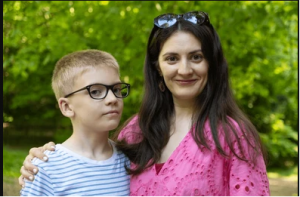
Jack and Sarah

Searsol: A Lifeline for Children with Dyslexia – A Parent’s Journey

As a parent, discovering that your child has dyslexia can be a daunting experience. It’s a journey filled with questions, concerns, and the urgent desire to find the right support to help your child thrive in an education system that doesn’t always cater to their needs. For one such parent, navigating these challenges led to Searsol – a company offering specialised computer-based learning programmes designed for children with learning difficulties, including dyslexia. Here is their story.

The Struggle

Sarah, a mother of two, realised something wasn’t quite right when her 10-year-old son, Jack, began to fall behind in school. “He was trying so hard, but reading and writing always seemed like a mountain he couldn’t climb,” she recalls. His schoolwork often took him twice as long to complete, and his self-esteem began to suffer as he compared himself to his peers.

After an assessment, Jack was diagnosed with dyslexia. While Sarah was relieved to understand why her son was struggling finally, the diagnosis brought its own set of challenges. Finding the right kind of support for Jack’s needs became her priority. Traditional tutoring didn’t seem to address the core issues of his dyslexia, and Sarah knew that Jack needed something more innovative and targeted.

The Turning Point – Discovering Searsol

During her search for alternative solutions, Sarah came across Searsol (www.searsol.com), a company specialising in typing classes. Designed specifically to help children with learning difficulties, Searsol’s touch typing course offered a unique way to help children with dyslexia.

“When I first heard about Searsol, I wasn’t sure how it would work. I didn’t know if Jack would take to typing, or if it would help his dyslexia,” Sarah admits. “But I was willing to try anything that could make schoolwork less of a battle for him.”

Searsol’s programme focuses on teaching touch typing in a structured yet flexible way. For children with dyslexia, learning to type can help reduce the stress of handwriting, improve spelling, and provide a more efficient way to express their thoughts. The computer-based lessons also offer visual and kinaesthetic learning styles, helping to reinforce the lessons in ways that are more accessible to children with dyslexia.

The Results – Building Confidence and Skills

After just a few weeks of attending Searsol classes, Sarah noticed a remarkable transformation in Jack. “He was more enthusiastic about doing his homework. The frustration that had been building for years was starting to fade,” she says.

The structured typing lessons helped Jack become more familiar with letters and words, and the repetition of typing improved his spelling significantly. As Jack’s typing speed increased, so did his confidence. Sarah noticed that he was now able to focus more on the content of his work rather than getting stuck on how to write it.

But the benefits went beyond the classroom. The increased confidence Jack gained from mastering typing began to spill over into other areas of his life. “He’s a different child now,” Sarah says with a smile. “He’s no longer the quiet boy in class who doesn’t want to participate. He’s willing to raise his hand and contribute, and I think that’s because he feels like he’s on the same playing field as his classmates.”

Why Searsol Works

Searsol’s success with Jack and many other children like him is built on their understanding that dyslexia affects more than just reading and writing. It affects a child’s confidence, their relationship with school, and even their overall happiness. By focusing on touch typing and harnessing the power of technology, Searsol provides a tool that empowers children to overcome these obstacles.

Moreover, Searsol’s programmes are designed to be fun and engaging, ensuring that children remain motivated. The flexibility of the course, where children can work at their own pace, ensures that no child feels rushed or left behind.

For Sarah, Searsol has been nothing short of a lifeline. “It’s given my son the tools he needs to succeed, not just in school but in life,” she reflects. “I can’t recommend it highly enough to any parent who’s going through what we went through.”


A Brighter Future

Thanks to Searsol, Jack is now looking forward to a future where dyslexia doesn’t define him. He’s confident, equipped with the skills he needs to succeed, and eager to take on new challenges. For Sarah, knowing that Jack has found his footing is the greatest relief.

Searsol continues to be a beacon of hope for many families, offering tailored solutions that give children with dyslexia the confidence and skills they need to excel. It’s a reminder that with the right support, every child can shine.

If you want to book a free trial assessment for your child, check out course centres located at www.searsol.com
Benefits of touch typing for a child with dyslexia

Benefits of touch typing for a child with dyslexia

Touch typing is a technique that creates a structure where you have to place different fingers on specific areas on your keyboard. You are using all your 10 fingers, and each one is in charge of a section or a column on the keyboard and it all starts with the home row.

Keyboard with speedskin covers

What is dyslexia?

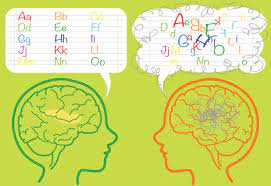
Dyslexia is a common learning difficulty that mainly causes problems with reading, writing and spelling. It’s a specific learning difficulty, which means it causes problems with certain abilities used for learning, such as reading and writing and has nothing to do with intelligence. Dyslexia affects up to 10% of the population and may impact an individual’s ability to split words into their component sounds, or phonemes.


Significantly, individuals with dyslexia are perfectly capable of comprehending complicated ideas and should not be limited in their potential because of a misunderstanding of their abilities. Sometimes all a person needs is a little more time to process information, or a new approach to processing information, such as having to listen to an ebook rather than reading.

For many children and adults, developing good literacy skills involves overcoming the obstacles offered by specific learning impairments such as dyslexia. Dyslexia affects reading, writing, and spelling ability, but it can also lead to low self-esteem and a lack of confidence in the classroom.


Mnemonic devices help in the learning of challenging words’ spelling. Reading requires reduced cognitive work when high-frequency language is memorised. 


Also, dyslexics who have received touch typing education can reinforce phonics knowledge, employ muscle memory to remember word spellings, and facilitate the translation of concepts into written language.

This makes the process of writing less difficult and makes writing more seamless and effective.

-Typing vs writing contrast, MRI images Higashiyama et al, 2015, Japan, Cognitive NeuroScience PLOS


Why learning how to touch type is suitable for a child with dyslexia:


Ideas flow smoothly from the fingertips and onto the screen while touch typing. There isn’t any distraction generated by letter formation. Spelling errors may be easily made and corrected without the discomfort of erasure marks or hasty crossing out. Many children who have severe learning disabilities struggle with English spelling at first because of its extremely irregular nature and the number of sound mappings that may be applied to the same letter and letter combinations. 


Typing classes also expose students to numerous samples of written language, allowing them to become more comfortable with these words. It becomes simpler to spell and sight-read words after repeated exposure.


Children who learn to touch type via the type wiz programme have their phonics skills enhanced while simultaneously learning how to navigate a keyboard. This is due to the fact that letters and words are read aloud, presented on the screen, and typed by the pupil.


Producing work on a computer also frees the writer from attempting to process thoughts in a linear fashion. Dyslexic individuals in particular benefit from being able to capture thoughts and then structure them later on. It can even improve physical dexterity and actually help to handwrite.


Benefits of touch typing for someone who is dyslexic

  • Touch typing provides phonics training helpful to dyslexic children

Typing assists dyslexic children in breaking down words into smaller sounds. This can be really beneficial for reading and spelling. Touch typing allows a dyslexic child to develop sound-letter correlation. This teaches a child which letters create which sounds. Touch typing also eliminates the child’s need to make letters. This allows a child to concentrate more effectively on the sounds and the characters that correspond to them.


  • Improved productivity

Concentration improves and output increases. They will be able to ‘write’ faster, sometimes up to five times their normal writing speed. This will save them time and make learning so much easier and enjoyable


  • Less stressful in exams

It means that in class or in exams, children with dyslexia can get their thoughts down on paper more easily because they don’t have to worry about how to form a word on paper. They don’t have to hold a pen in the right way to make a mark and they don’t have to make the letters and words look neat or spaced out.

  • Touch typing employs multi-sensory learning and develops muscle memory.

Touch typing is multi-sensory as it links sight and hearing to touch. The tactile element of pressing the keys helps with remembering the sounds that make up tricky words. Touch typing also develops muscle memory which is very useful when learning letter patterns and spelling.


  • Typing at the speed of thought

Touch typing helps a child to think freely and type at the speed of thought as here is no distraction in having to look down at the keyboard to hunt and peck for the correct key. Making familiar patterns with the fingers starts to become automatic so that they begin to spell sight words and common words just by remembering the movement of their fingers on the keyboard.

  • Messy handwriting will be eliminated

Using a computer, individuals with dyslexia can type freely, without worrying about messy handwriting or errors. If they have learnt to touch-type properly, they will be typing accurately, barely having to hit the backspace key to correct their work. Another huge bonus, is when they are trying to stay focused on their thoughts.

.

  • Increased confidence

There are so many reasons why touch typing is the right choice for children with dyslexia. It helps them to transform their thoughts and ideas freely into words, giving them the confidence and ability to communicate effectively.


Why not get your child to try out our free trial assessment touch typing course where you’ll gain valuable insights into your child’s current typing accuracy and word per min speed. 

There is no obligation to continue on and you will receive a report which will outline what your child’s typing speed will be in their first six months of attending a Searsol typing centre.

Click here https://searsol.com/find-centers/?search